According to the South Florida Wading Bird report, released this week, wading and diving birds built about 26,395 nests in the region, a 39 percent decline in the 10-year average. This was the third consecutive year nesting numbers have been down after a spike in 2009, which produced 77,505 nests, the highest total since the 1940s.
Die Bekassine (Gallinago gallinago), die in diesem Jahr vom NABU Deutschland aus Naturschutzgesichtspunkten in den Vordergrund gestellt wird, ist in ihrem Bestand stark gefährdet und droht in unseren Breiten als Vogelart auszusterben. In der "Roten Liste" der bedrohten Tier- und Pflanzenarten wird die Bekassine, die auch als "Meckervogel" oder "Himmelsziege" bezeichnet wird, in der höchsten Bedrohungsstufe "1" geführt. "Die "Null" bedeutet, dass eine Art nicht mehr vorhanden ist", erklärt der Vorsitzende des Duisburger Stadtverbandes des Naturschutzbundes (NABU), Jürgen Hinke, das alarmierende Ausmaß der Gefährdung dieser Vogelart. Insgesamt 70 Brutpaare wurden in Nordrhein-Westfalen noch gezählt; in der Walsumer Rheinaue konnten im vergangenen Jahr noch 40 Exemplare dieser selten gewordenen Schnepfen-Vögel beobachtet werden.
Staniel is the old English word for the kestrel (Falco tinnunculus), the hovering falcon. Staniel is long forgotten now; our modern English name for the bird comes from the French crécerelle, and I was put in mind of all this recently on a weekend trip to Normandy, where I was delighted to find kestrels hovering all over the place, not least above motorway verges: on a 50-mile stretch of the A28 which runs between Alençon and Rouen, I counted 18 of them. Twenty years ago, this was also a typical sight on the M1, M4 and M6, so much so that the kestrel became nicknamed the motorway falcon; the long, undisturbed grass verges, even with heavy traffic thundering past, had turned out to be perfect hunting grounds for the voles and mice on which kestrels feed. But today it would be a rare occurrence indeed to spot 18 kestrels in 50 miles of the M1, for the bird is increasingly in trouble in Britain, with its numbers dropping by 32 per cent in the years between 1995 and 2010, and a staggering 36 per cent decline just between 2008 and 2009. In the 1960s, 70s and 80s, when birds of prey such as peregrine falcons and buzzards were struggling because of pesticide poisoning and persecution, kestrels were flourishing; but now the situation is reversed, and they are the most threatened of our common raptors.
Four UK wading bird species saw numbers fall to new lows last year, a survey has revealed. Lapwings, oystercatchers, snipe and curlew are all at their lowest numbers since the British Breeding Bird Survey of more than 100 bird species started in the early 1990s, the results for 2011 have shown. All four species suffered sharp drops in numbers compared with spring 2010, with populations tumbling by 40% for snipe (Gallinago gallinago) and by almost a fifth for oystercatchers (Haematopus ostralegus) (19%) and lapwings (Vanellus vanellus) (18%). Curlew (Numenius arquata) numbers declined by 13% between 2010 and 2011.
Europe's largest wading bird, the curlew Numenius arquata, is facing extinction in Wales. The RSPB now think there could be as few as 576 pairs left. In 2006 the RSPB thought there were about 1,100 pairs left in Wales. Conservation officer Dave Elliott who works with the animals in Hiraethog, Snowdonia, the only place in Wales where they now breed, said: “The rate of decline has been about 50-80% in the last 15 year period. There may not have been any chicks fledged this year. They certainly disappeared from the uplands quicker than I have ever seen".
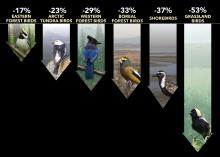
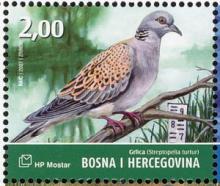
The latest figures from the Breeding Bird Survey (BBS) show that four breeding wading birds have reached their lowest levels since the survey started in the early 1990s. Volunteer birdwatchers reported particularly low numbers of lapwing, oystercatcher, snipe and curlew during the spring of 2011. These birds breed on wet grassland and upland habitats across the UK, where they rely on earthworms and other invertebrates for food. All four species saw sharp declines between 2010 and 2011, of 19 per cent for oystercatcher Haematopus ostralegus, 18 per cent for lapwing Vanellus vanellus, 40 per cent for snipe Gallinago gallinago and 13 per cent for curlew Numenius arquata. The BBS produces annual population trends for over one hundred widespread bird species. Ten species have declined by more than 50 per cent since the start of the survey in 1994, including turtle dove, which has declined by a staggering 80 per cent. Since the start of the survey Britain has lost more than half of the following ten species: Turtle Dove Streptopelia turtur -80%; Willow Tit Parus montanus -79%; Wood Warbler Phylloscopus sibilatrix -65%; Whinchat Saxicola rubetra -57%; Grey Partridge Perdix perdix -55%; Nightingale Luscinia megarhynchos -52%; Yellow Wagtail Motacilla flava -50%; Pied Flycatcher Ficedula hypoleuca -50%; Spotted Flycatcher Muscicapa striata -50%; Starling Sturnus vulgaris -50%.
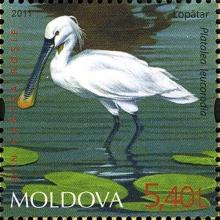
In tegenstelling tot de (sterk afnemende) broedpopulaties van steltlopers (scholekster Haematopus ostralegus, kluut Recurvirostra avosetta, strandplevier Charadrius alexandrinus, bontbekplevier Charadrius hiaticula, watersnip Gallinago gallinago, grutto Limosa limosa, kievit Vanellus vanellus, wulp Numenius arquata, tureluur Tringa totanus, kemphaan Philomachus pugnax), die in de broedtijd afhankelijk zijn van insecten, werd bij de visetende broedpopulaties van aalscholver Phalacrocorax carbo, lepelaar Platalea leucorodia en kleine mantelmeeuw Larus fuscus in de trilaterale Waddenzee sinds 1991 een spectaculaire toename vastgesteld, zo blijkt uit de nieuwste analyse van internationale waddenzeetrends die in 2009 beschikbaar kwam op www.waddensea-secretariat.org. Ook andere visetende broedvogels, zoals de grote stern Thalasseus sandvicensis, de visdief Sterna hirundo en de dwergstern Sterna albifrons doen het uitstekend in het Waddengebied. Onderzoek van SOVON toonde aan dat het broedsucces van omnivore kokmeeuwen Larus ridibundus in de periode 1997-2003 veel hoger was aan de kust dan in het binnenland, mogelijk door een grotere beschikbaarheid van vis aan de kust. Dezelfde tegenovergestelde ontwikkelingen zijn sinds de jaren 1990 ook waargenomen bij het beschermingsplan moerasvogels.
De wulp Numenius arquata leeft in ons land zowel in zoetwatermeren, plassen en rivieren, als in intergetijdengebied en in agrarisch gebied. Geschikte voedselterreinen voor de wulp zijn ondiepe oevers van plassen en rivieren, droogvallende platen in intergetijdengebied en graslandpercelen. Wulpen zijn vooral te zien in het oosten van het land: Drenthe, Overijssel en Noord-Brabant herbergen het leeuwendeel van de Nederlandse wulpen. Ook de Waddeneilanden huisvesten veel wulpen. De gegevens van SOVON duiden er op dat de broedpopulatie van de wulp sinds 1990 significant achteruit gaat. Ook in veel andere delen van Europa vertoont de Wulp sinds de jaren 1990 een dramatische achteruitgang (gegevens Birdlife International, zie bijlage). De soort staat op de rode lijst van Duitsland als met uitsterven bedreigd. Wulpen moeten op de heide met een steeds grotere maat lantaarn gezocht worden: de stand is er sinds 1990 met 87% gekelderd. In het binnenland bestaat zijn dieet uit regenwormen, larven van langpootmuggen (emelten) en andere ongewervelden zoals kevers en pissebedden.
De wulp broedt in duinen, weilanden, moerassen, etc., met dichte vegetatie. In het binnenland bestaat zijn dieet uit regenwormen, larven van langpootmuggen (emelten) en andere ongewervelden zoals kevers en pissebedden. In getijdengebieden bestaat het uit wormen, jonge strandkrabben (vooral ’s zomers) en andere kreeftachtigen, en plaatselijk ook uit schelpdieren.
A 72-page 2010 publication raises new and troubling questions about a widely used insecticide's potential for harm to bees, beneficial insects, and bird populations. Using imidacloprid as an example, Dutch toxicologist Dr. Henk Tennekes reports on the hazards of imidacloprid to insects and birds. Imidacloprid is a neonicotinoid chemical, and has systemic action in plants. Other European researchers have linked this insecticide to significant risks for honey bee populations, including possible links to Colony Collapse Disorder.
Dr. Tennekes' findings indicate that imidacloprid (and possibly other neonicotinoid-type insecticides) can bind irreversibly to critical receptors in an insect's nervous system. If these receptors are permanently blocked, the insecticide would not follow a typical dose-response curve. He provides evidence that long term low level to imidacloprid exposure can lead to neurological problems and eventual death of insects.
Studies have shown imidacloprid to be highly persistent in the environment (RCC Compendium of Pesticide Information). In his book, Tennekes presents data showing that imidacloprid has contaminated most of the waterways in the Netherlands.
Systemic activity in plants combined with long-term persistence in the environment and toxicity at low concentrations can be a dangerous combination. Many vulnerable species over large areas could be exposed to this insecticide on land, in surface water following runoff from treated areas and in groundwater due to its potential for leaching through certain soil types.
Several previous studies have shown that imidacloprid is highly toxic to various forms of wildlife, including honey bees, certain beneficial insects, upland game birds, and crustaceans
Tennekes further suggests that imidacloprid has led to a general decline in the insect populations in the Netherlands, and this lack of food in turn has been responsible for declines in bird populations.
De populatie van visetende vogels in de Nederlandse binnenwateren groeit gestaag sinds 1981. De aalscholver Phalacrocorax carbo populatie ging van 6.600 paar in 1979-1983 naar gemiddeld 21.000 paren in 1999-2003. De futenpopulatie Podiceps cristatus laat over de periode 1981-2003 een matige toename in aantallen zien. De grote zilverreiger Egretta alba broedt vanaf 1991 jaarlijks in ons land en het aantal stijgt sinds 1998-2000 spectaculair. De ijsvogel Alcedo atthis populatie laat sinds 1981 een sterke toename zien van >5% per jaar. De visarend Pandion haliaetus laat in Nederland sinds 1988 een matige toename zien.